

TAVR for Severe Aortic Stenosis
A minimally invasive way to replace a narrowed aortic valve and restore healthier blood flow. TAVR is designed for patients with severe aortic stenosis and offers an alternative to traditional open-heart surgery. Using advanced catheter-based technology, our team can replace the valve with a less invasive approach—helping many patients recover faster and return to daily life sooner.
What is TAVR?
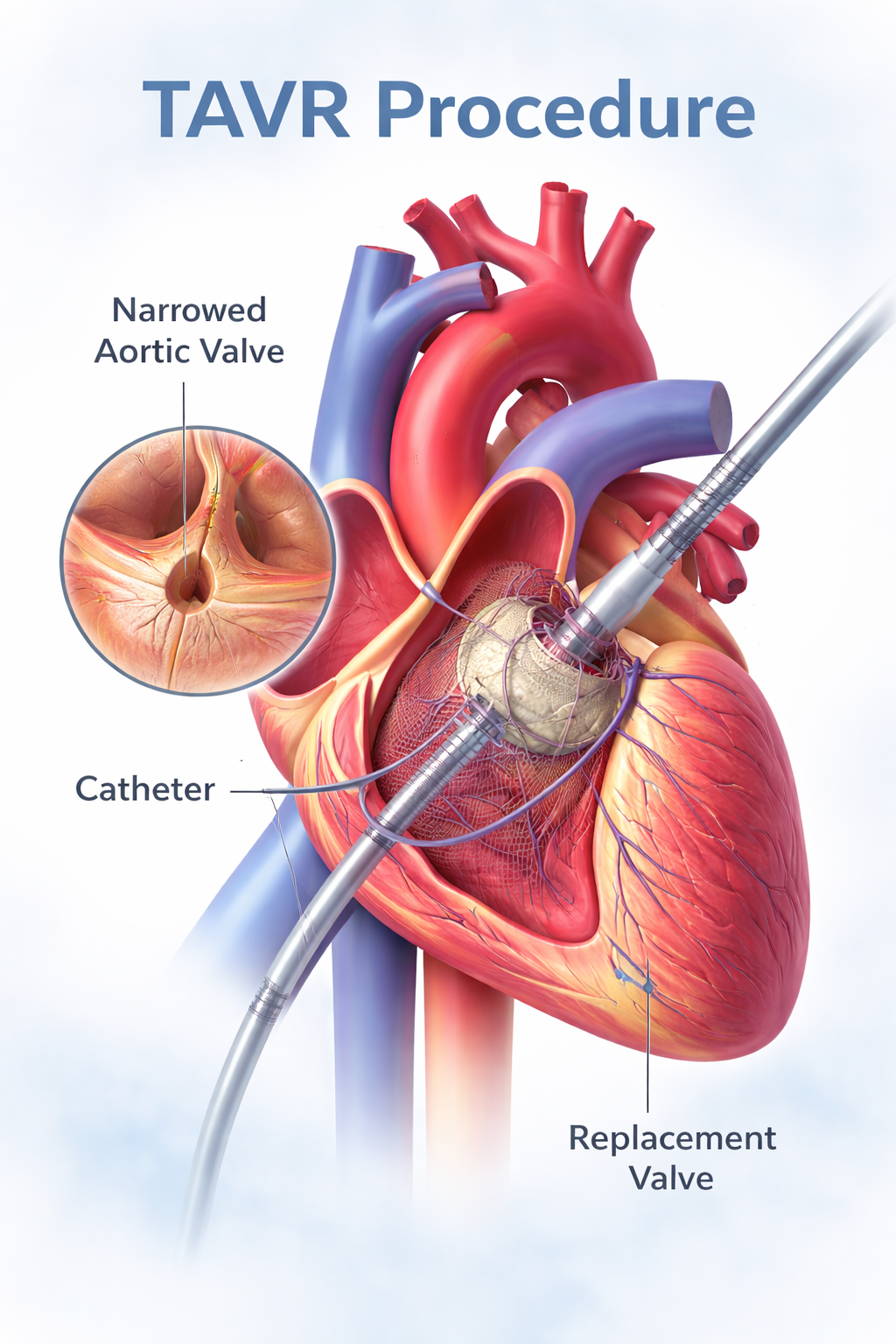
Transcatheter Aortic Valve Replacement (TAVR) is a minimally invasive procedure used to treat severe aortic stenosis, a condition where the aortic valve becomes narrowed and does not open properly.
When the valve cannot fully open, the heart must work harder to pump blood to the rest of the body. Over time, this can lead to symptoms that affect daily life and overall heart function.
During TAVR, a new valve is delivered through a thin, flexible catheter—usually inserted through an artery in the leg—and positioned inside the diseased valve. This allows blood to flow more normally without the need for traditional open-heart surgery.
Who may be a candidate?
You may be a candidate for TAVR if you have been diagnosed with severe aortic stenosis or are experiencing symptoms that suggest your aortic valve is not functioning properly.
- Shortness of breath
- Fatigue or reduced energy
- Chest discomfort
- Dizziness or fainting
- Difficulty with physical activity
Your structural heart team will evaluate your condition using imaging, testing, and your overall health history to determine whether TAVR is the right treatment option for you.
Benefits of TAVR
TAVR offers a less invasive alternative to traditional open-heart surgery for many patients.
- Minimally invasive procedure
- No traditional open-heart surgery
- Shorter hospital stay
- Faster recovery time
- Improved blood flow
- Relief from symptoms such as fatigue and shortness of breath